Posts

How Culture Impacts Occupational Engagement

          Culture impacts occupational engagement in many ways. Culture can be defined as, "the knowledge, beliefs, values, assumptions, perspectives, attitudes, norms, and customs that people acquire through membership in a particular society or group" (Hammel, 2013). This means that how and where a person live and who they are around influences their culture. The article, "Occupation, Well-being, and Culture: Theory and Cultural Humility," talks about the different dimensions of cultural diversity which are: well-being, cultural humility, positioning, race, class, gender, sexuality, and ability (Hammell, 2013). These different dimensions all relate back to the Occupational Therapy Practice Framework's personal and environmental factors (OTPF-4, 2020).           Well-being is defined as, "a state of contentment--or harmony--with one's physical/mental health, emotional/spiritual health, personal and economic security, self-wort...
The History of Disability Reflection

       Today in class Bruce Keisling, PhD talked about the history of disability. We also watched the CBS  documentary by Bill Baldini, "Suffer the Little Children." The presentation as well as the documentary showed how the intellectually disabled (ID) and developmentally disabled (DD) have been treated in the past within the United States.       In the early 1900s, the intellectually and developmentally disabled were seen as "feeble-minded." This led to the Eugenics Movement from 1920-1965 (Keisling, 2023). The Eugenics Movement was a terrible time for our country because they only wanted people with absolutely no medical or mental issues to breed. The Eugenics Movement thought that they could rid society of crime, poverty, and mental illness within just three generations.      "Suffer the Little Children" was about the conditions of Eastern PA State Institute for the Feeble-Minded and  Epileptic (Pennhurst). This d...

A Reflection on the Eleanor Clarke Slagle Lecture By Ruth Zemke

Image
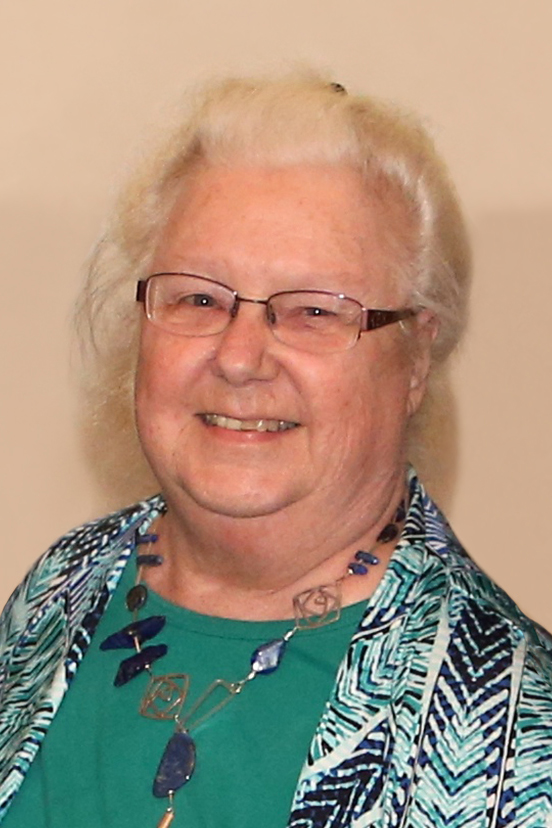
Image Source     Ruth Zemke, PhD, OTR, FAOTA, Professor Emeritus, was a professor at the USC Department of Occupational Science and Occupational Therapy (Rado, 2004). Ruth was the co-principal investigator of the Well Elderly Study which showed the importance of occupational therapy in elderly individuals (Rado, 2004). She received the Eleanor Clarke Slagle Award, which is one of the most distinguished awards an occupational therapist can receive.  I chose the 2004 lecture by Ruth Zemke,  "Time, Space, and the Kaleidoscope of Occupation" because I was intrigued to see how Zemke connected a kaleidoscope to occupation.        In this lecture, Zemke talks about how occupational therapy can be compared to a "kaleidoscope." She says that like a kaleidoscope interacts with multiple reflections, occupation interacts with multiple elements. The main elements Zemke describes are time and space. She explains how we view time differently based on the oc...

Welcome to knOTts' thoughts...

Image
Welcome to knOTts' thoughts...     Hi my name is Olivia Knotts. I am a first year Occupational Therapy student at the University of Tennessee Health Science Center in Memphis, Tennessee. I went to Freed-Hardeman University in Henderson, TN for my undergrad where I majored in Kinesiology with an emphasis in exercise science. I got married July 30, 2022 to my husband, Matthew. I love the outdoors, reading, painting, and spending time with my friends and family.